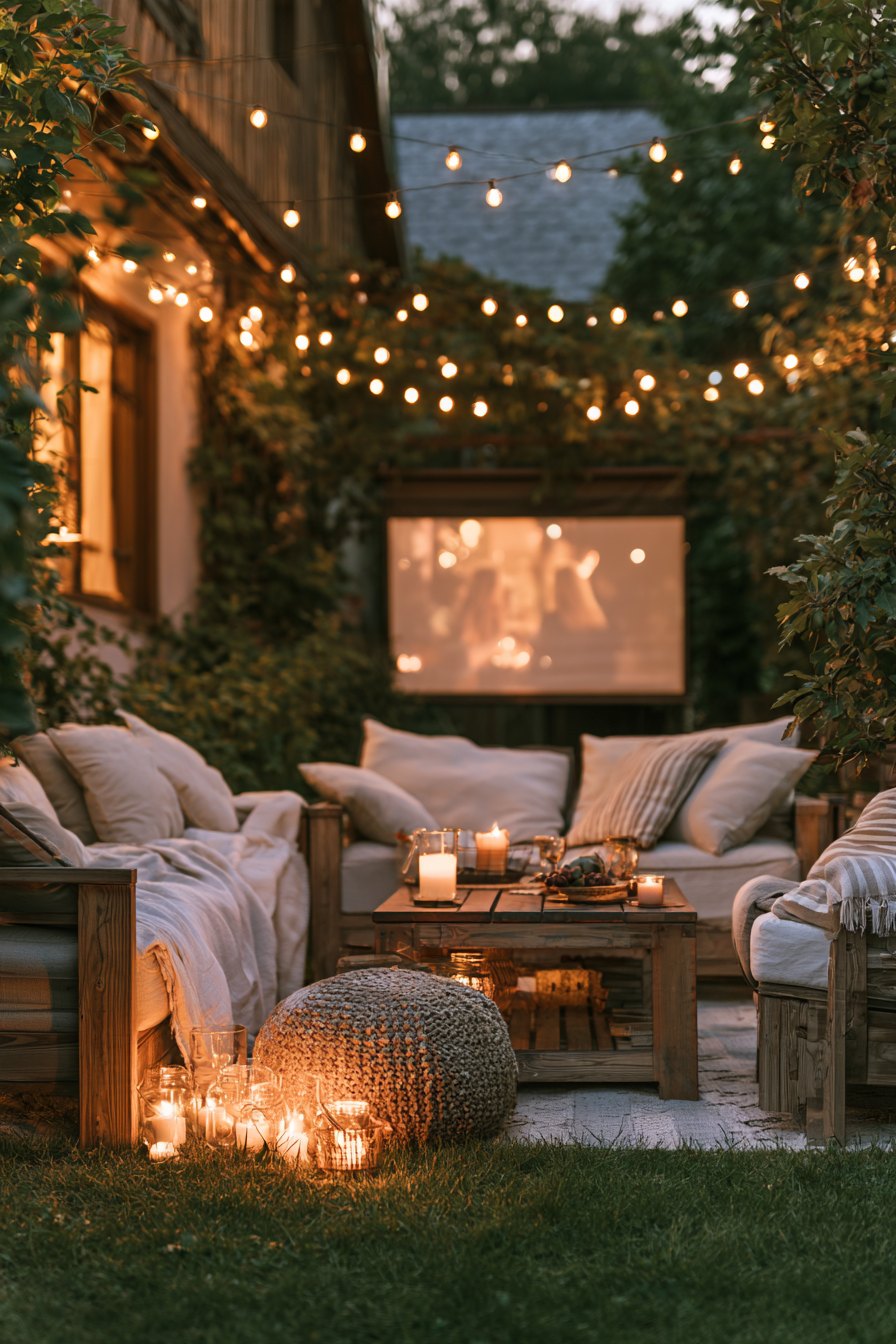
A small backyard is not a dealbreaker for an outdoor movie setup. A 12-by-15-foot patio can work fine. What breaks the experience is not the size of the space — it is bad planning around screen placement, ambient light, and sound bleed into the neighbors' yard. Here is how to get it right without a long weekend of trial and error.
How Much Screen Can Your Yard Actually Handle
The rule that holds across most setups: your viewing distance should be roughly 1.5 to 2.5 times the screen's diagonal. For a tight backyard where your seating tops out at 12 feet from the screen, a 100-inch (8.3-foot diagonal) screen is the upper limit that stays sharp. Push to 120 inches at that distance and you will notice softness on anything less than a 1080p source. A 90-inch screen at 10 to 12 feet is the sweet spot for most small yards — bright, sharp, and you do not need a $1,500 laser projector to fill it well.
For throw distance, a standard projector needs about 1.0 to 1.5 feet of distance per 10 inches of screen width. A short-throw projector changes that math significantly — some produce a 100-inch image from just 4 to 5 feet away, which matters a lot when your yard is only 15 feet deep. Budget $400 to $700 for a decent short-throw unit with at least 2,500 ANSI lumens. Anything below 2,000 lumens struggles after evening's golden hour fades and neighbors' lights come on.
Screen Options That Fit a Small Footprint
You have four real options for small backyards:
- Freestanding frame screens — the most stable option; a 100-inch frame folds down and stores flat. Setup takes about 20 minutes once you know the sequence.
- Tensioned pull-down screens on a pergola or fence — clean look, but you need a solid horizontal support at least 10 feet high.
- Inflatable screens — fast to set up and genuinely portable, but they wobble in any wind over 10 mph and the image surface wrinkles more than a frame screen.
- A painted wall or fence — if you have a flat, light-colored exterior wall in the right position, a coat of screen paint ($30 to $50 for a quart that covers 50 square feet) gives you a zero-footprint, zero-setup surface that holds up well.
Ambient Light, Sound, and Power
Kill every light source behind and beside the screen before you start. String lights strung above seating look great but wash out the image if they face the screen. Move them behind the seating line or switch to low-output warm bulbs pointed downward. A dark screen surround — black fabric border, dark fence — raises perceived contrast noticeably. If your projector struggles in your yard, the issue is almost always stray light, not the projector itself.
For sound in a small yard, a portable Bluetooth speaker in the 20 to 40-watt range (something like a Soundcore Motion+ or a JBL Charge) keeps audio contained and avoids the echo problems that a soundbar aimed at an open yard creates. If two or more adults are in the back row, stereo separation matters — two smaller speakers placed at screen corners, 6 to 8 feet apart, beats one powerful center speaker every time.
Run a dedicated outdoor-rated extension cord (12 AWG, at least 50 feet) from a GFCI outlet. Do not daisy-chain power strips outside.
The Content Problem Nobody Talks About Enough
You can spend a Saturday getting the screen, projector, and speakers dialed in perfectly, then sit down Friday night and spend 40 minutes arguing about what to watch across four different apps. The content is fragmented. Libraries rotate. A film that was available last month is gone. If you want a genuinely wide, stable library without tracking which service has what, a service like this streaming option consolidates access across categories in a way the standard subscription model does not.
How the Evening Actually Feels When It Works
When the setup is right — screen at eye level from your seating, projector humming quietly behind the chairs, speakers at the corners, lights off — an outdoor movie night in a small yard feels genuinely different from watching inside. The sky above the image, the cooler air, the fact that everyone chose to be there rather than drift to separate rooms: it changes the dynamic. It is worth the setup effort.
What to watch is the last variable to solve. The honest answer is that deciding fast matters more than deciding perfectly. Pick a genre everyone will tolerate, not a title everyone must love. If you want a library broad enough that this decision takes two minutes instead of thirty, a consolidated IPTV subscription removes the tab-switching that kills the mood before the night even starts.
Frequently asked questions
What screen size works for a backyard that is only 10 feet deep?
At 8 to 10 feet of viewing distance, cap yourself at an 80 to 90-inch screen. You can go slightly larger with a short-throw projector, but the seating will feel cramped. Prioritize screen brightness and image sharpness over raw size at this distance.
Do I need a special outdoor projector?
Not necessarily. A standard 1080p projector with 2,500 or more ANSI lumens works well outdoors once you control ambient light. Dedicated outdoor projectors are weather-sealed and useful if you plan to leave the unit outside, but for a setup you bring out and take in, an indoor projector stored properly is fine.
How do I deal with wind affecting the screen?
Stake or weight freestanding frame screens at the base and use guy-wires on inflatable screens. If you are in a consistently windy area, a painted wall or a tensioned screen mounted to a solid fence is more reliable than any freestanding solution.
Is an IPTV subscription legal in the US?
Legality depends on the specific provider and the content they carry. Research any service before subscribing. If you want a broad, stable library without juggling multiple monthly subscriptions, explore what a dedicated IPTV plan covers and compare it against what you currently pay across individual services.